Shown here are a sample of some of the flowering perennials we use with photos and short descriptions. We also use many other perennials not shown here, and if you have a favorite perennial it can be used in our designs.
*I took photos below at various locations in the area as good examples of perennials and do not necessarily have any connection to Robert J. Kleinberg Landscape Design and Construction.
Many additional Photos of Trees, Shrubs, Perennials, Bulbs, and Annuals can be seen in various albums on my Facebook Page
(Winter time, March, April, May, June)
Perennials for Sunny Areas
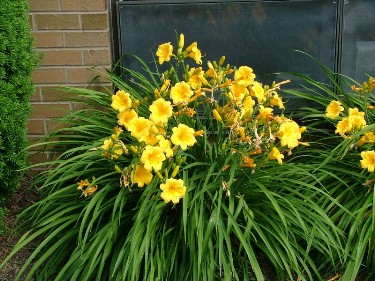
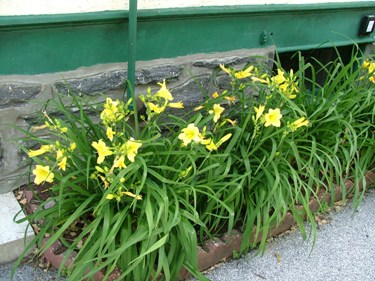
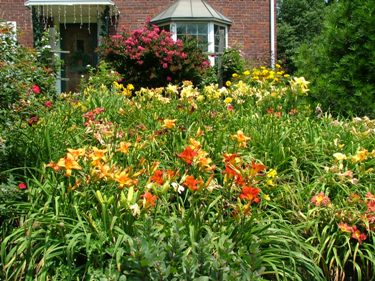
Hemercallis – common name Daylilies: Daylilies come in many colors, sizes and blooming times. Older wild varieties grow to 3-ft. tall with floppy foliage, are usually orange and bloom for a short time in June and that’s it. Many newer varieties were developed with many different colors, larger flowers, and more refined foliage, but they still have a rather short period of bloom. The latest varieties (and in my opinion some of the best perennials of all) are re-blooming Daylilies. The plants will bloom in June and then off and on till frost. The foliage is denser and more upright than the wild varieties, and the plants usually bloom at a height of about 18 to 20-inches. While wilder varieties can grow in some shade, the more sun the re-bloomers get the better they do, and the more they bloom. If they get enough sun they are very easy to grow. Some of the more common varieties are “Happy Returns” a light yellow variety and “Stella d’Oro” a golden yellow variety. These plants are nice enough to be used alone and still brighten up a garden.
-

- Daylilly ‘Stella d’ Oro’ – One of the most popular perennials – for good reason. Reblooming with a golden yellow color.
-
- Daylily ‘Happy Returns’ – Similar to ‘Stella d’Oro but with a lighter yellow color.
-
- Daylillies – A mix of different colors. These have larger flowers than the rebloomers, but only bloom once
-
- Daylily – Naturalized orange daylily – Very commonly seen along the road in June.

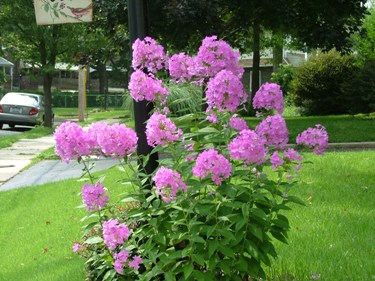
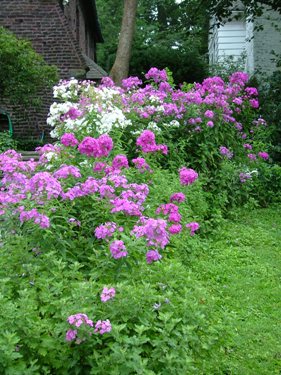
Phlox paniculata – common name Summer Phlox: Newer disease resistant varieties of Phlox are greatly improved over past varieties. Phlox grows as erect stems, 2 to 3 feet tall, with large colorful flower heads. It comes in a lot of colors and blooms for weeks in summer. Phlox is one of the most colorful summer perennials. It is important to get one of the newer disease resistant varieties. Phlox does best in a sunny location.
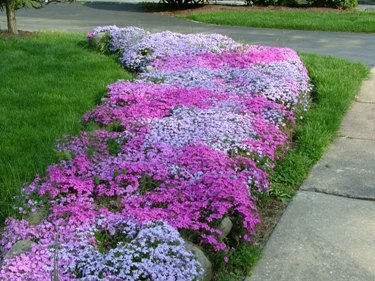
Phlox subulta – common name Creeping Phlox: Nice early blooming and low growing phlox that blooms for a few weeks in early spring. Makes a good ground cover and can grow over rocks and walls. Very colorful flowers cover the entire plant. Weeds need to be kept in check more with low perennials like this because of their low stature they can be overgrown by taller plants.
-
- Summer Phlox – light pink
-

- Summer Phlox – mixed colors
-
- Creeping Phlox – mixed colors
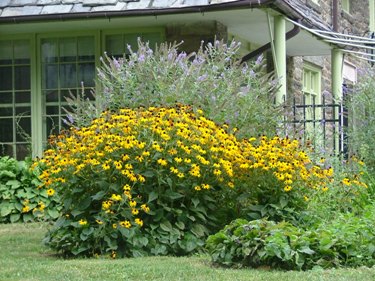
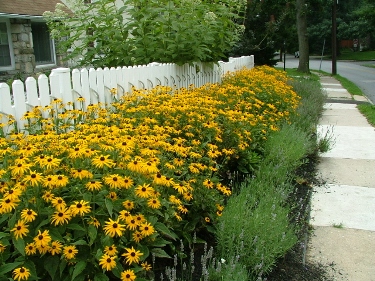
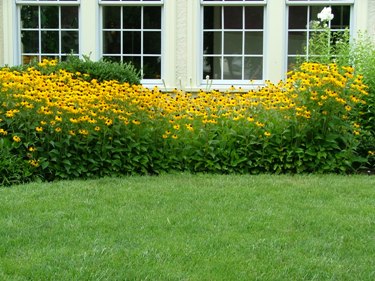
Rudbeckia – common name Black Eyed Susan: Rudbeckia “Goldsturm” (the most popular variety) is an easy to grow long blooming perennial that can stay in bloom for two months. It has a tendency to spread so it need some room or you will spend a lot of time pulling it away from your other plants. Rudbeckia grows to about 2-feet and blooms mid-summer into fall. It does best in the sun but it can take a little shade. A great perennial in a location where it can be allowed to take over, but needs some maintenance when planted close to other plants.
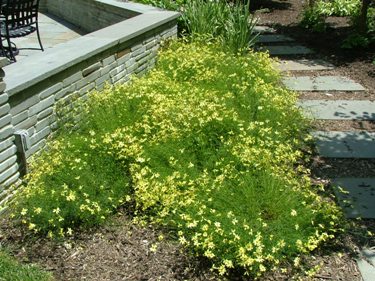
Coreopsis verticillata – Common name Tickseed: Coreopsis will bloom most of the summer and even into fall. “Moonbeam” has a pale yellow flower which is small but the plant is covered with these small flowers. Easy to grow in sunny location. The leaves are very thin, almost needle like. “Moonbeam” is the a popular variety of Coreopsis, and many other reliable varieties are available; some with darker yellow flowers, and some newer varieties with dark red flowers. A good low maintenance perennial that may not be as showy as some of the larger flowered plants, but still a colorful great plant for the garden.
Click here for photos of 23 different varieties of Coreopsis from Terra Nova Nurseries.
-
- Coreopsis verticillata
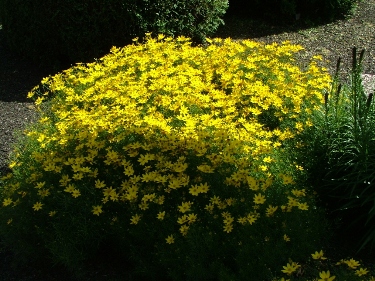
-
- Coreopsis verticillata – close-up
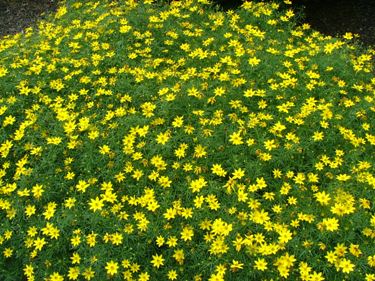
-
- Coreopsis verticillata ‘Moonbeam’
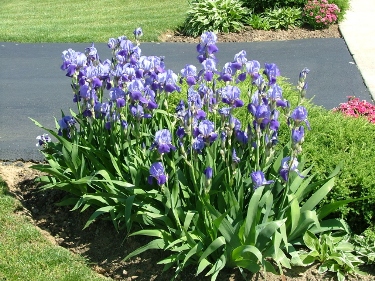
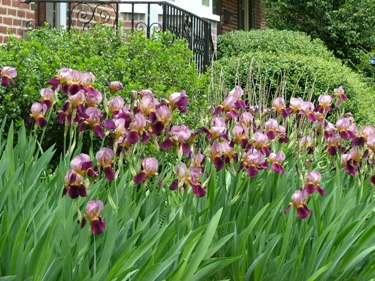
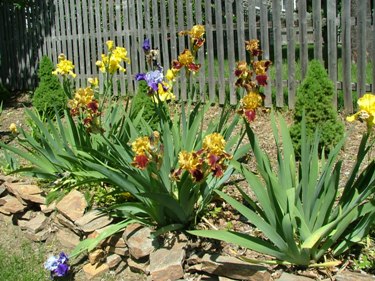
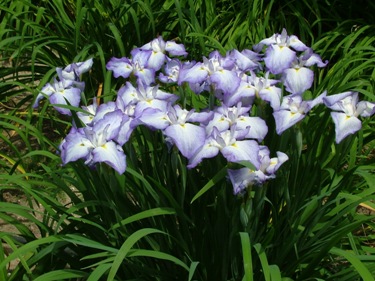
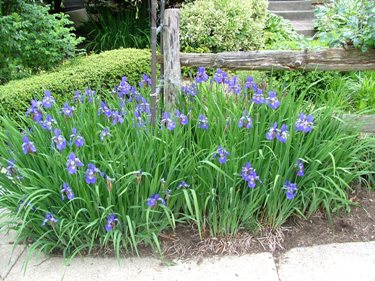
Iris: German or Bearded Iris come in many colors (Iris is the Greek word for rainbow) They have about 1-inch wide sword like leaves that can range from a few inches tall to over a foot tall. Flower stems can range up to 3-feet tall. Bearded Iris normally bloom in spring, but some newer types bloom again in fall and these are recommended over other varieties. Bearded Iris sometimes have problems with insect borers and have to be divided every few years so they require some maintenance. Siberian Iris are easier to grow. They have a more limiter color range – white, blue and purple – but the leaves can give a much nicer effect in the garden. Siberian Iris leaves are narrower but form a thicker upright clump about 3-ft. tall. Japanese Iris have flatter, wider flowers and because of that work nice if you are viewing them from above. Japanese Iris are said to be a little harder to grow than other varieties. Iris need some sun for best results.
-
- German Iris – two toned blue
-
- German Iris – two toned burgundy
-
- German Iris – mixed colors
-
- Japanese Iris – Light Blue
-
- Siberian Iris
-
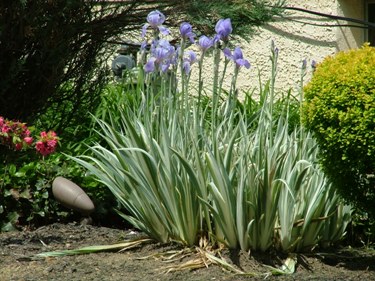
- Iris with variegated foliage
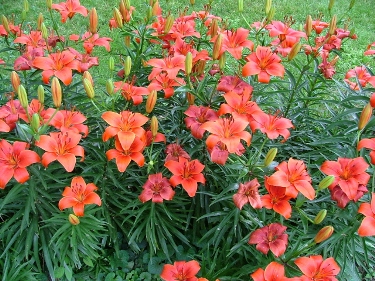
Lilium – common name Lily: Often grouped with bulbs, but for all practical purposes the are used the same as the other perennials on this page. Lilies have very large colorful flowers and are very popular in cut arrangements. Lilies bloom for only a couple of weeks each summer and taller varieties sometimes need staking. With these drawbacks in the garden I still like the Oriental varieties because of their great fragrance. Different varieties grow 2-ft. to 4-ft. and they come in various combinations of white, yellow, pink, and red with out facing flowers. Asiatic hybrids have more colors and upright flowers but they do not have the fragrance of the Oriental hybrids. Lilies generally have narrow stems and can be grown with other perennials or annuals at their base. Lilies do best with some sun.
Click here for additional photos of Oriental Hybrid Lily
Click here for additional photos of Asiatic Lillies
-
- Asiatic Lily – Blooms in June in this area
-

- Oriental Lily ‘Casa Blanca’ – Fragrant, blooms in July in this area.
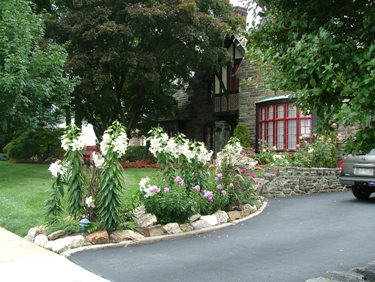
-
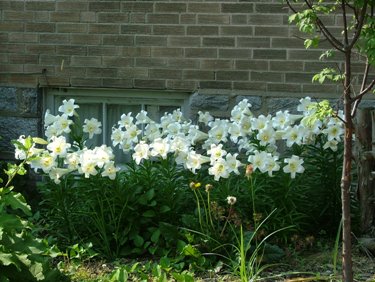
- Easter Lily – Blooming at their normal time – Early July. These were planted outdoors after Easter and bloomed the next year.
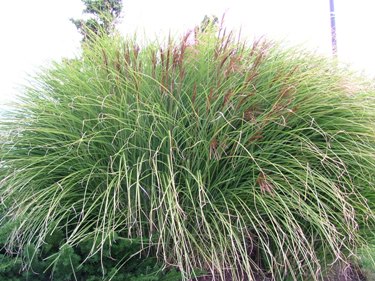
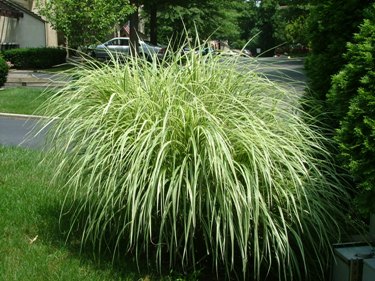
Ornamental Grasses: Grasses generally grow best with some sun and are a nice textural change from the other plants in most gardens. They come in many sizes from a few inches tall to over 6-ft. tall. The planting of one group, Miscanthus (common name Maiden Grass), is currently being discouraged because it is displacing native plants in the wild, but many other nice varieties are available. Besides their interesting textures, grasses come in colors that range from common green to blue, to shades of maroon, and variegated types with stripes of white or light yellow. The seed stalks on some grasses can be more interesting than the leaves.
-
- Blue Fescue – Nice low growing grass. Needs dividing when the center starts to die out.
-
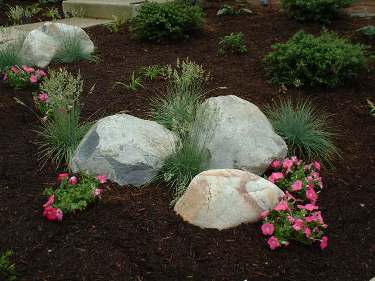
- Elymus magellanicus – Blue Magellan Grass – Great blue color, low to medium sized grass. Don’t know much about it but growing well here in Drexel Hill, PA

-
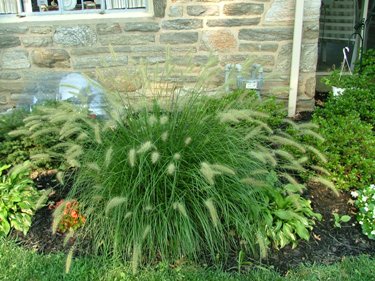
- Hamilin Fountain Grass – Nice medium sized grass, not over powering. Nothing special about the color, but good for texture and the right size for many gardens.
-
- Miscanthus – Maiden Grass – Large growing grass. Nice where you have a lot of room, but should not be planted near wild areas.
-
- Miscanthus – Maiden Grass – Large growing grass. Nice where you have a lot of room, but should not be planted near wild areas.
-
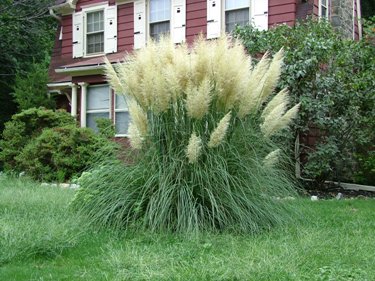
- Dwarf Pampas Grass- (I Believe) – Growing nicely in Lansdowne, PA Even with the name still a large plant that needs a lot of room.
-
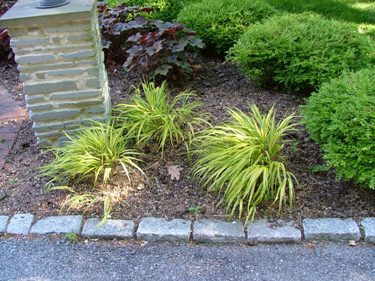
- Hakonachloa ‘Aureola’ – Low growing grass that can take some shade. Very nice.
-
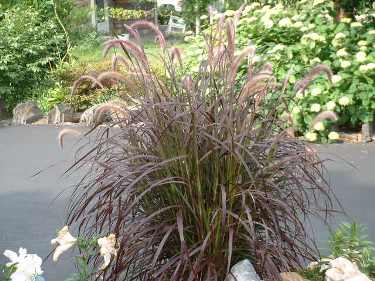
- Annual Red Fountain Grass – Not hardy in this area. Quickly grows to over 2-ft. high and wide. Very interesting and easy to find in Spring.
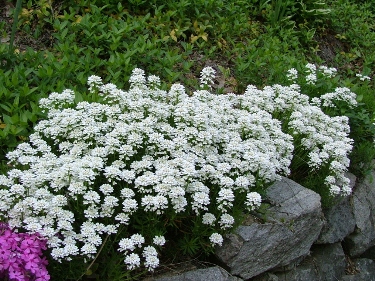
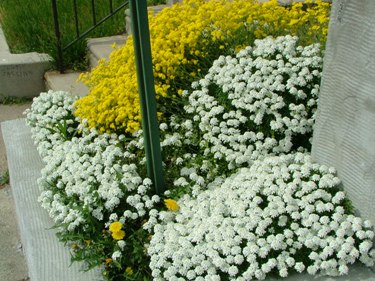
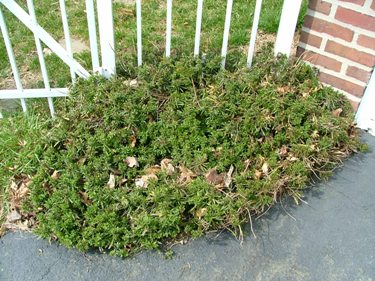
Iberis – common name Candytuft: Iberis is a low growing evergreen perennial with white flowers in early spring. It keeps a neat compact growing habit for many years. Grows best with some sun
-
- Iberis – Nice low growing ground cover. Blooms for a few weeks in Spring
-
- Iberis – Good plant for dressing up a wall
-
- Iberis in winter – Evergreen dense foliage.
Perennials for Sunny or Shady Areas
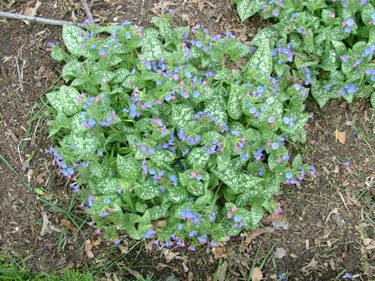
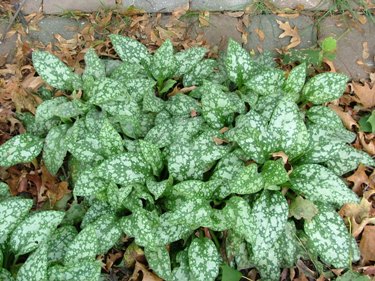
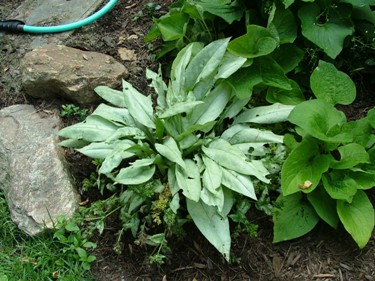
Pulmonaria – common name Lugwort: Pulmonaria is an easy to grow perennial that will slowly spread to establish itself as a ground cover. The leaves are often spotted white – sometimes described as spilt milk. The flowers are nice in early spring but they are more often grown for the nice effect of their leaves. They like some shade and can get a little brown on the edges if grown in too much sun. This plant looks better close up and it does not stand out in the distance because its leaves are usually under 1-foot tall.
-
- Pulmonaria – Blooms for a few weeks in Spring. Flowers are nice, and need to be seen close up because of their small size – but a nice plant for the foliage alone.
-
- Pulmonaria – Interesting markings on the leaves. A low, slower growing ground cover.
-
- Pulmonaria – Different varieties can have different lesf shapes and very different markings on the leaves.
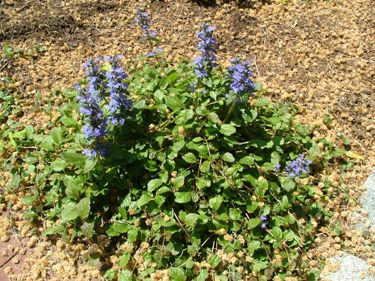
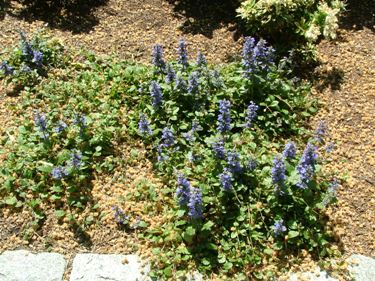
Ajuga – common name Bugleweed: Ajuga is usually grown for its ground-hugging purple leaves. It spreads quickly and can be an aggressive ground cover and a problem in lawns. It will grow in sun or shade and has short spikes of violet flowers in spring. Very colorful when in bloom and nice color in leaves when out of bloom. Care has to be taken to make sure it has room to spread without interfering with other plants.
-
- Ajuga in bloom.
-
- Ajuga ground cover.
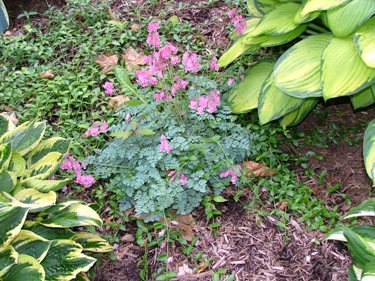
Dicentra eximia – common name Fringed Bleeding Heart: Dicentra eximia is shorter and has smaller flowers than the more often seen Dicentra spectabilis, but it has a much longer period of bloom from May off and on through fall with pink heart shaped flowers. It also has nice foliage all season long with fine textured bluish gray leaves. It can grow in sun or light shade. A nice plant but not real showy; best seen up close.
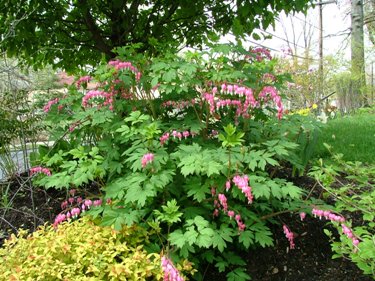
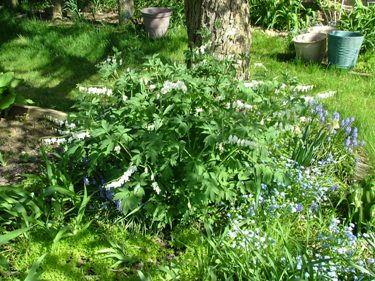
Dicentra spectabilis – Bleeding Heart: A nice long lived old fashion plant that blooms in spring with interesting heart shaped flowers. Plants can get 3-ft. wide and then disappear in summer; so they are better planted where the empty space won’t be noticed or planted with spreading plants that will fill in around it.
-
- Dicentra eximia – Longer lasting flowers and more interesting foliage than Bleeding Hearts. Smaller flowers and stature.
-
- Bleeding Hearts – Interesting heart shaped flowers. An old fashion favorite.
-
- Bleeding Hearts – Can also come with white flowers. Interesting but I prefer the regular flavor.
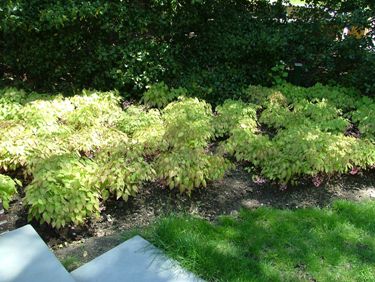
Epimedium – common name Barrenwort: Epimedium is often grown for its foliage and for its ability to grow at the base of trees. It can grow in shade and has small but colorful flowers in spring. Another nice plant that is not real showy and best seen up close near a walk. Slow spreading ground cover. New leaves and leaves in fall can have a crimson color on some varieties.
-
- Epimedium – nice ground cover for a shady area. I like Hosta better, but some people think Hosta are too common
-
- Epimedium in bloom – Flowers are nice, but small and hidden under the foliage on some varieties.

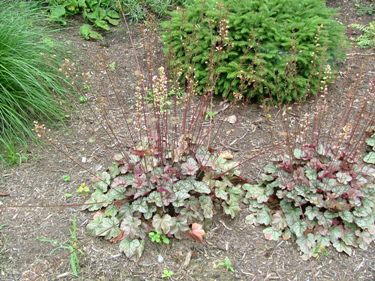
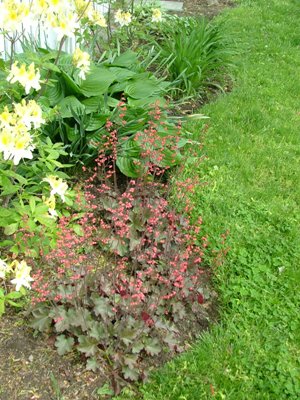
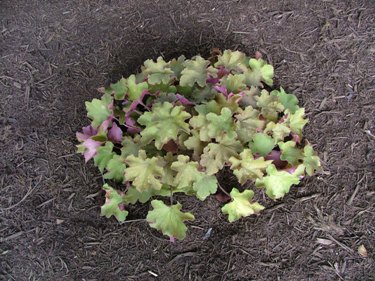
Heuchera – common name Coral Bells: Heuchera has two types that are commonly grown that work in completely different situations. Coral Bells grown for their flowers bloom in late spring for about a month with tall stalks about 2-ft. and filled with many small bell shaped pink to red flowers. The flowers are nice but work best mixed with other flowers because of their small size. When not in bloom the foliage of some varieties have interesting ring markings on green leaves and are usually low growing clumps. These varieties work best with some sun for best flowering.
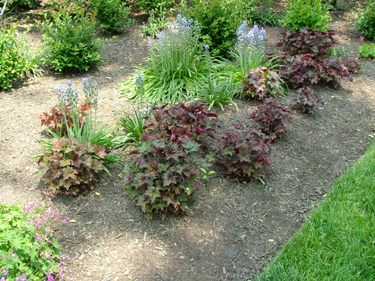
The other type of Heuchera is grown for its foliage, which could range from light caramel to dark purple. The leaves are larger and the plants can grow to over 24-inches. These plants can be grown in some shade and can stand drier conditions. The flowers are insignificant on most of these types. This is a great plant for a shade garden, but I think the darker colors looks best when seen up close because the dark leaves can get lost in the distance in a shady garden. One nice variety is “Palace Purple”
Newer varieties are being developed that are said to have great flowers and foliage, such as the ‘Soda’ series from Terra Nova Nurseries. I only know what I read about these varieties, but they sound great.
Click here to see almost 50 different varieties of Heuchera from Terra Nova Nurseries.
-
- Heuchera Silver Scrools with flowers
-
- Heuchera (Coral Bells) with flowers
-
- Heuchera Palace Purple -grown for its foliage.
-
- Heuchera Caramel – Caramel color on top, rosy colored on bottom of leaves
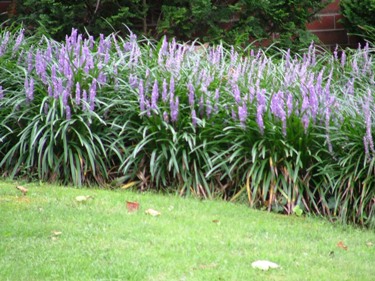
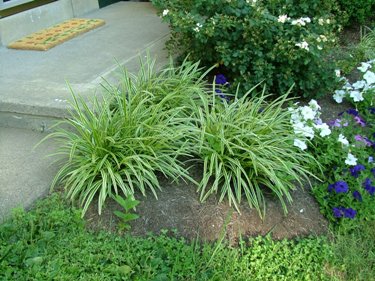
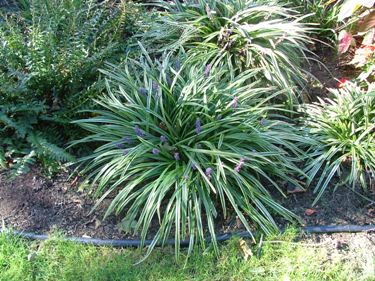
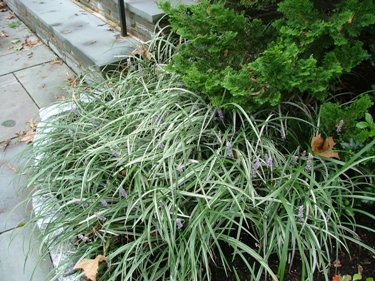
Liriope – common name Lilyturf: Liriope is a great perennial for sun or shade. It is grown primarily for its foliage and I prefer the variegated types (green leaves with white stripes) that can brighten up shady areas. Liriope has nice violet flowers in August, but they are secondary to the foliage which is evergreen. The older foliage on Liriope does get a little ratty at the end of the winter and it can be removed at that time before the new growth comes in. It looks nice around evergreen shrubs in a foundation planting or in groups in open beds. Highly recommended.
-
- Liriope Green – can have larger flowers than variegated variety. Some varieties form a dense ground cover.
-
- Liriope variegated group
-
- Liriope variegated with flowers
-
- Liriope Silver Dragon – a little more open and not asclump forming as the other varieties.
Perennials for Shady Areas
Hosta – common name Funkia: Hosta is usually grown for it foliage and does well in the shade. Hosta is easy to grow and multiplies in a clump form that is easily divided. Many people get hosta from neighbors with extra plants but often times much nicer varieties are available. Larger varieties can grow to over 3-ft. wide with large leaves. Some varieties have variegated leaves (green with white or light yellow) that can lighten up a shady corner and can look good in the distance. Hosta flowers in summer and some varieties have attractive large white or light purple flowers, but hosta’s main attribute is usually the foliage. Highly recommended for shady areas.
-
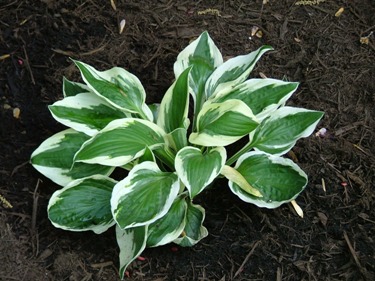
- Hosta Patriot – Nice clean foliage with a wide white margin. Medium sized plant.
-
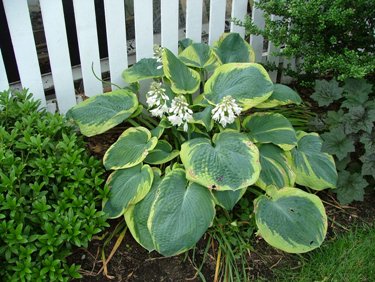
- Hosta Francis Williams with flowers – Large Hosta with big leaves that can fill up and brighten a shady area.
-
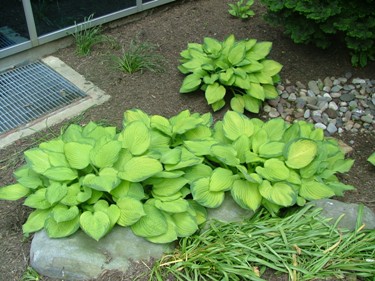
- Hosta ‘Gold Standard’ – medium to large size hosta – good for lighting up a shady area
-
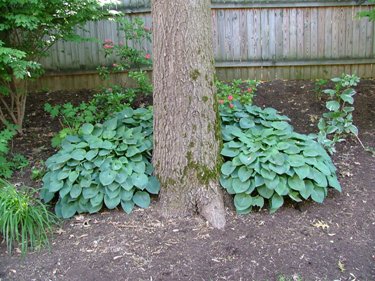
- Hosta – Nice blue color on the leaves of this variety. Photo shows potential to use these plants around the trunks of trees.
-
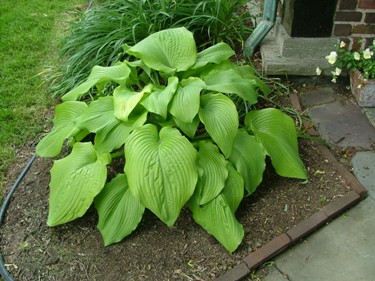
- Hosta ‘Sum & Substance’ – One of the largest Hosta with very large leaves. Too much sun can burn the leaves. A large hosta like this will leave a large empty space for a number of months so plan ahead.
-
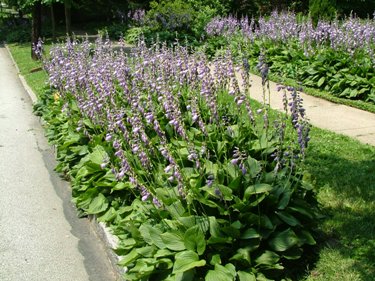
- Hosta – mass planting with flowers – not normally grown for their flowers, but as this planting in Swarthmore, PA shows, the flowers can make a surprisingly nice show.
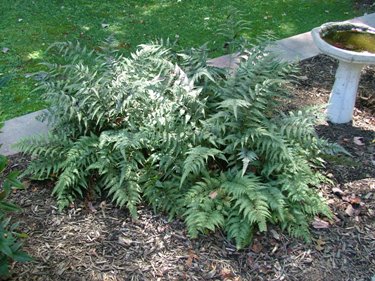
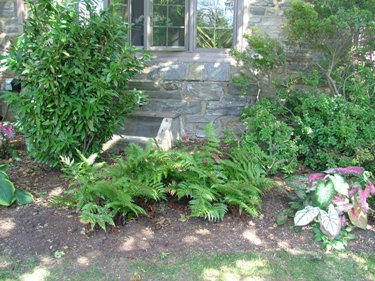
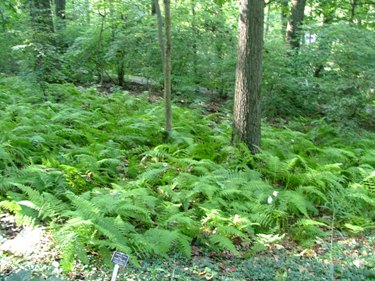
Ferns: Ferns are nice old fashion plants that are great in a shady garden. Christmas ferns have evergreen foliage that will give you a nice look year round. Japanese painted fern has interesting leaves with different colors. There are many different varieties with different full grown sizes and textures to chose from. Ferns do not have colorful flowers so they work best when you are trying for a restful look in your shady garden.
-
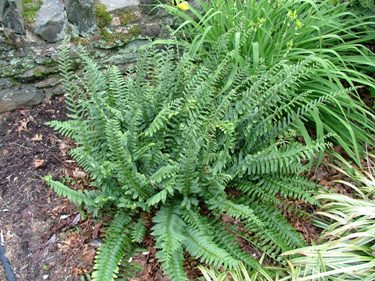
- Christmas Fern – Evergreen fern with dark green fronds.
-
- Autumn Fern – Evergreen fern – fiddleheads and new fronds in spring have a reddish tint
-
- Ferns planted as an under story groundcover as commonly seen in nature.
-
- Japanese Painted Fern – interesting shades and texture.